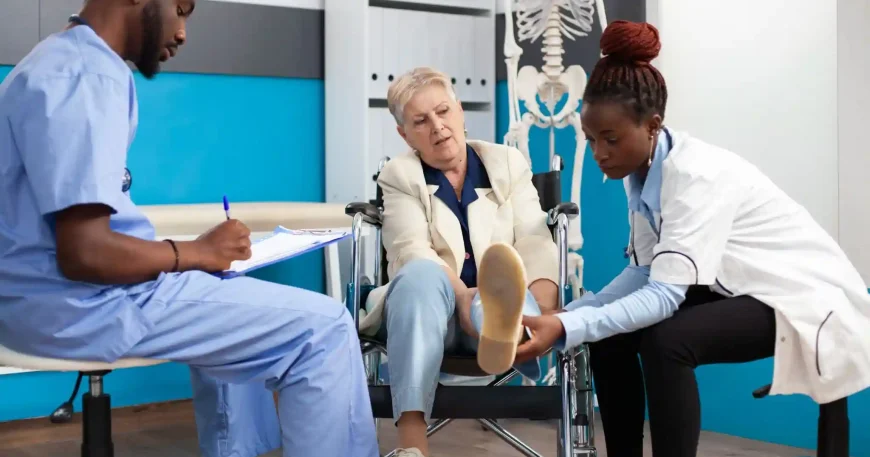
Winning in the podiatry field is not a solo event. Although clinical skills, agility, and education do play a crucial role, one of the drivers of development and achievement is mentorship, yet it is rarely addressed. The benefits of the mentorship program in podiatric careers have far reaching effects outside of development of skills- it builds long term relationships, professional clarity, emotional stability and a sense of belonging in an exclusive healthcare society. The current podiatrists (those that have just graduated school or are still on new specializations) discover that mentorship is essential in ending up through the changing environment of foot and ankle care.
Why Mentorship is Important in Podiatry?
Even more, unlike most professions, podiatry relies on a combination of surgical accuracy, diagnostic skills, empathy towards patients, and business skills. This is not only highly fulfilling but also overwhelming especially to the doctors of early career.
Mentorship is a connection between the classroom theory and the practice in the field. A 2024 survey of podiatric students and young clinicians in the Journal of Podiatric Medical Education found that 89 percent of the respondents attribute their easier transition and increased career satisfaction to structured mentorship.
Professional mentors act as the sounding board to difficult cases, understanding of trends in the podiatric field, and support in critical stages of a career. Describing it in simple terms, a long-time mentor, Sasha Patel, is a podiatrist, who explains that mentorship is not only about acquiring techniques, but also about character and confidence building.
The Core Mentorship Program is of benefit to aspiring/veteran podiatrists in such a manner
1. Easier School-to-practice Transition
To new graduates, the transition between the classroom setting and working with a real patient caseload may be overwhelming. The mentorship program provides the much-needed advice, how to deal with challenging diagnoses, cope with the stress in the operating room, and even how to talk to problematic patients or families.
- Professional development of podiatrics.
- Supporting podiatry in its early years.
- Healthcare clinical mentorship.
2. Achieving Clinical and Surgical Confidence
All the podiatrists recall the first complicated case. To have a mentor to consult on the issue of surgical planning or patient management does not only assure young doctors but improves their judgment. Real-life example: At the time of his residency, Dr. Michael Kim was not confident in doing wind debridement. He learned how to do it in a short time due to his mentor and avoided the pitfalls.
3. Finding your way in Career Specializations
The area of podiatry is wide, and new branches like sports medicine and the salvage of diabetic limbs, as well as care of children, emerge. Mentors who have the experience of treading those steps can shed some light on them, clarify the routes of certification, and open the gates to subspecialties that are in line with personal passion.
4. Prevention of Burnout and Emotional Well-being
The pressure of medical practice is emotional, and podiatric specialists have to cope with a great number of expectations and difficult cases. Empathic mentors who can offer mindfulness techniques can assist newer clinicians in becoming resilient, clear, and even have an optimal balance between work and life- tested barriers to burnout.
5. Professional Development, Networking and Leadership
Mentorship also creates networking and leadership opportunities automatically. Experienced mentors are able to refer the mentee to employment or research projects or podium space at conferences. In one study (Podiatry Today, 2024), mentored clinicians were more likely to be in leadership positions in their respective hospitals or associations twofold.
Real-Life Success: The Mentorship Ripple Effect
Take the example of a particular case of Dr. Zoe Whitman, who joined podiatric residency in 2022 interested in biomechanics but not much involved with clinical research. She met a successful researcher Dr. Ian Lee through the mentorship program of her hospital. Zoe has not only published work to her credit but also, under his guidance, managed to be confident enough to present her work at the Global Podiatry Summit. She has now become a mentor to others and the good cycle continues.
The Effect of the Formal Mentorship Programs in Podiatry
Structured mentorship programs are currently being conducted in most academic centers, large clinics, and professional organizations. These are usually paired with newer podiatrists and accomplished professionals and include regular meetings, shadowing, and discussions in a peer group.
The best practices based on the American Podiatric Medical Association (APMA) are:
- Specific objective formulation and measuring improvement.
- Two-way communication between mentee and mentor.
- The focus on open and honest communication.
- Great encouragement of underrepresented minorities and foreign graduates.
The distance mentoring and online shadowing has greatly increased during the pandemic-and in 2025, they will still be vital in uniting clinicians without attention to the geography.
Value Research and Expert Insights: Data-Driven Value.
In a 2023 review in the Journal of Foot and Ankle Surgery, the effect of mentorship in a variety of programs was analyzed:
- Mentored podiatrists were reported to have faster board certification 72%.
- 81 percent noted that there was enhancement in communication skills with the patient.
- Two-thirds (68 percent) had better chances of publication or of teaching.
These figures are resounding with the expert opinion. Dr. Rachel Myles attributed this to the fact that the mentorship relationship is invaluable, since it creates competence, grit, and trust, which is difficult to achieve without.
Mentorship Program in Established Podiatrist: Lifelong Benefit
Although the stereotype implies that mentorship is only necessary in the beginning of the career, most experienced podiatrists consider the reverse mentorship to be the most effective source of career revitalization, as younger doctors can teach them the newest technological advances or new procedure techniques. These changing alliances keep all of them continually expanding with the discipline.
In overcoming barriers to effective mentorship, the influence of the previously mentioned practices is significant. In the process of overcoming barriers to effective mentorship, the role of the above mentioned practices cannot be underestimated.
Mentorship is not always ideal. Good programs focus on time commitments, well-established expectations and relaxed forms of communication. Positively, today, there are increasing numbers of institutions that train mentors to be culturally humble and diversity aware so that every podiatrist can feel welcomed and supported.
The Future: The Virtual Mentorship and Inclusive Communities
Rural students and international graduates are finding their way through virtual mentorship programs and specialty-specific Slack channels and global fellow networking. Technology-based support will spread the fruits of mentorship, career guidance, psychological security and lifetime friendships in all parts of the profession.
FAQs
1. What are the most important advantages of mentorship among podiatrists?
Mentorship builds confidence, clinical competencies, career development, networking and offers emotional support at different stages of the podiatric careers.
2. What are the mentorship programs that new podiatry graduates can be provided with?
Graduates get the opportunity to be part of mentorship programs in hospitals, professional associations, and podiatric schools or by networking at medical conferences.
3. Do mid-career podiatrists respond to mentorship programs?
Indeed, mentorship programs assist in updating the skills, developing leadership, exposure to innovations, and learning among the mid-career podiatric professionals.